State HOA law and Carlsbad cases · November 2026
Building an ADU in a Carlsbad HOA
Much of Carlsbad was built as master-planned communities, often with a master association and a sub-association. State law limits how far CC&Rs can go against an ADU, and a Carlsbad condo owner found where those limits end in court in 2026.
 Planned community rooftops
Short answer
If you own a house on a single-family-zoned lot in a Carlsbad planned development, California Civil Code 4751 voids any CC&R or HOA rule that effectively prohibits or unreasonably restricts an ADU or JADU. The HOA can still review the design, set reasonable standards for looks and materials, and ban rentals of 30 days or less. Condos and townhomes are a different story: in April 2026 a San Diego Superior Court judge ruled that the law did not protect a Mystic Point condo owner in Carlsbad. AB 956, reported signed for January 1, 2027, would extend the protection to all common interest developments.
This is not legal advice
This page explains state law and reported cases in general terms. It is not legal advice and creates no attorney relationship. HOA disputes turn on your CC&Rs' exact wording and your lot's zoning, so talk to a California HOA attorney before relying on any of it against your association.
Civil Code 4751: what it covers, and what it does not
AB 670 (Friedman, 2019) added Section 4751. It voids any deed restriction or governing-document provision in a planned development that "effectively prohibits or unreasonably restricts" building or using an ADU or JADU. The protection applies to a lot zoned for single-family residential use, for a unit that meets the state ADU or JADU standards in the Government Code.
Under the current text, three conditions must all be met:
- The community is a planned development, the typical Carlsbad tract of separately owned lots, not a condominium project.
- The lot is zoned for single-family use.
- The ADU or JADU itself meets state law, which in Carlsbad means it also meets CMC 21.10.030.
Subsection (b) keeps reasonable restrictions in force. A restriction is reasonable if it does not unreasonably increase the cost of construction, effectively prohibit construction, or take away the ability to build the ADU or JADU the state allows. AB 3182 (2020) did not amend 4751; it added the rental section below.
What your HOA can and cannot do
| The HOA can | The HOA cannot |
|---|---|
| Require an architectural application and approval before work starts | Ban ADUs or JADUs outright on a single-family lot in a planned development |
| Set reasonable standards for appearance, design, materials and height, even stricter than the City's | Impose standards that unreasonably raise the cost or make the ADU impossible |
| Adopt rules on ADU occupants' use of shared facilities such as pools and clubhouses | Block a garage conversion only because the CC&Rs say garages are for cars |
| Keep enforcing garage-parking rules against owners who do not convert | Require the owner to live on the property because it has an ADU |
| Ban rentals of 30 days or less | Prohibit or unreasonably restrict long-term rental of the ADU or JADU |
| Require owner occupancy of a home that has a JADU (as reported) | Count your ADU as a separate unit toward a rental cap |
Sources: Civil Code 4741 and 4751; Epsten and Davis-Stirling summaries. Whether an HOA's view-protection rule can limit an ADU is described by Davis-Stirling as unsettled. Turning an ADU into a separately sold condo would need the association's written authorization, and Carlsbad does not allow separate sale anyway.
New or changed ADU rules require general notice to members and a comment period first (Civil Code 4360).
Architectural review under Civil Code 4765
Where approval is required for physical changes, Section 4765 sets the minimum process:
- The procedure must be fair, reasonable and expeditious, written into the governing documents, with a stated maximum time to respond.
- Decisions must be made in good faith and cannot be unreasonable, arbitrary or capricious.
- Every decision must be in writing. A denial must give the reasons and explain how to ask for reconsideration at an open board meeting.
- A decision cannot violate law, including building, land-use and public-safety codes.
No statute sets a fixed number of days for an HOA to rule on an ADU. The 60-day clock people quote belongs to the City permit, not the association, so your HOA's own documents set its deadline. Section 4765 also does not authorize changes to common area that conflict with the governing documents. So a trench, meter or construction access across common area likely needs its own approval (our reading, not a sourced rule).
Rental rules under Civil Code 4741
Section 4741, added by AB 3182 and effective January 1, 2021, limits how far an HOA can restrict renting:
- An owner is not bound by a governing-document provision that prohibits or unreasonably restricts renting a separate interest.
- The HOA may still ban rentals of 30 days or less. Carlsbad's own ADU rules already require rentals of more than 30 days, so this rarely changes anything.
- An HOA cannot cap rentals at less than 25% of the separate interests. An ADU or JADU is not a separate interest, and a home is not counted as renter-occupied when the owner lives in it or in its ADU or JADU.
- Owners who took title before a restriction was adopted keep their rental rights, and a willful violation can cost the HOA damages plus up to $1,000.
JADUs and owner occupancy
A JADU is the one case where living on site can be required. Davis-Stirling's summary says an HOA may require owner occupancy of a single-family home that has a JADU, mirroring state JADU law, but may not require it for a home with an ADU. That statement comes from a law-firm summary; we have not checked it against statute text. The state rule itself moved in 2026: since January 1, owner occupancy is required only when the JADU shares a bathroom with the house, and AB 1154 requires JADU rentals to run more than 30 days. Carlsbad's code still lists owner occupancy for JADUs, so a JADU in an HOA can face both the City's deed restriction and an association rule. See the JADU page on the bathroom choice.

The Mystic Point ruling (Carlsbad, April 2026)
Adam Hardesty owns a three-story condo at Mystic Point, a Carlsbad condominium community. After an HCD planner backed his reading of state law, he began turning his garage into a rental unit with a City permit. The HOA, whose rules limit garages to car storage, sued. In early April 2026, San Diego Superior Court Judge Victor Torres ruled for the HOA on two grounds:
- Section 4751 covers planned developments, not condominium projects.
- It applies only to land zoned for single-family use, and Mystic Point's zoning also allows townhomes and condos.
The judge said he expected the question could reach the Court of Appeal. Hardesty told reporters he had spent more than $100,000 and could not afford to appeal. Reports differ on whether the unit was an ADU or a JADU; CP&DR said the work dug into the foundation of a six-unit townhome building. It is a trial-court ruling, not binding precedent. For Carlsbad condo and townhome owners the lesson is plain: until the law changes, 4751 may not help, and building before the HOA signs off is the expensive way to learn that.
An appellate case worth knowing
Eng v. Opperman (First District Court of Appeal, December 19, 2025, Portola Valley). The court upheld an HOA board's denial of an ADU and garage application under the business judgment rule and deference to board decisions, and awarded the HOA $113,531.50 in fees. Lesson: follow the HOA process exactly, and split the application if asked.
AB 956: the change reported for 2027
AB 956 (Quirk-Silva) is reported to have been signed on September 29, 2026 as Chapter 791, effective January 1, 2027, per LegiList and FindHOALaw. Official legislative sites had not confirmed it when we checked, so treat it as reported and verify on leginfo.legislature.ca.gov before you rely on it. As reported, it amends 4751 in the two ways that decided Mystic Point:
- It extends the voiding rule from planned developments to any common interest development, which would bring condos and townhome communities in.
- It changes "zoned for" single-family use to "zoned to allow" single-family use, which would cover mixed zoning like Mystic Point's.
It also amends Civil Code 714.3 and Government Code 66323, and requires cities to approve two new detached ADUs ministerially on a single-family lot instead of one.
Carlsbad communities with master associations
Several master plans required a master association with village sub-associations, which can mean two reviews for one ADU.
| Community | Association structure | Other ADU factors |
|---|---|---|
| Aviara (92011) | Master association plus several sub-HOAs, per a real-estate source; an approved paint palette under the name Aviara Master Association suggests color controls | Master Plan MP-177 was approved by the Coastal Commission in 1988, so the Coastal Zone applies; hillside review |
| La Costa (92009) | The Arroyo La Costa Master Plan required a master HOA with village sub-associations and an Architectural Review Board | Olivenhain water and Leucadia sewer in Arroyo La Costa; hillside ordinance on 25%+ slopes |
| Rancho Carrillo (92009) | Master Plan MP 139 required a master declaration and a master HOA with sub-associations; Rancho Carrillo Master Association files as a nonprofit | RV parking limited to approved storage; manufactured slopes |
| Bressi Ranch (92009) | Bressi Ranch Community Association | Small lots, one listing at 4,792 sq ft |
| Robertson Ranch (92010) | HOA and CC&Rs addressed in Master Plan MP 02-03, section II.F.16 | Fuel modification zones next to open space; lots from 4,000 sq ft |
| Calavera Hills (92010) | HOAs present; names not confirmed | Rolling hills, 15+ subdivisions from the late 1980s on |
Structure comes from City master plan documents where they exist, and otherwise from real-estate and law-firm sources. Terramar, near the beach, has its own Terramar Association with private beach access rules.
Older neighborhoods such as the Village and Barrio mostly have no HOA, so the City rules are the whole story there.
How to get an ADU through your HOA
Get the documents
Request the recorded CC&Rs, architectural guidelines, any ADU or garage policy and the annual notice of what needs approval, from both the master and the sub-association if you have two.
Confirm the two legal facts
Is the community a planned development or a condominium project? Is your lot zoned for single-family use? Your title report and the City's zoning map answer both, and they decide whether 4751 protects you today.
Check the City side first
Confirm the ADU fits Carlsbad's size, height, setback, coastal and fire rules. An HOA has more trouble calling a design unreasonable once it already meets city code and state law.
Design to the guidelines
Match roof, colors and materials to the house, as the City requires anyway, and use the HOA palette.
Map any common-area impacts
Show utility routes, meters, staging and gate access, and get written approval for anything touching common area.
Submit a complete application in writing
Use the HOA's form, keep a dated copy, and note the response deadline stated in its procedure. Split the submittal if the board asks.
Get the decision in writing
Section 4765 requires it. File your City permit in parallel if your documents allow it, and do not start construction until both approvals are in hand.
If the HOA says no
- Read the written denial. It must state the reasons and how to request reconsideration. If you received only a verbal no, ask for the written decision.
- Ask for reconsideration at an open board meeting, and answer each stated reason. Often one revision, a window or a roof height, fixes it.
- Separate reasonable from unreasonable. A demand for matching stucco is likely reasonable. A requirement that makes the ADU cost far more, or rules it out entirely, is what 4751 targets.
- Talk to an HOA attorney before you threaten litigation or start work. Eng v. Opperman ended with the owner facing six figures in the association's fees, and Mystic Point with an owner who could not afford an appeal.
- Keep the City permit on track. The City's approval does not override CC&Rs, and an HOA approval does not replace the City permit; you need both.
Designers report higher fees for HOA work; the cost calculator lets you flag an HOA lot.
In pictures
What HOA review usually looks at


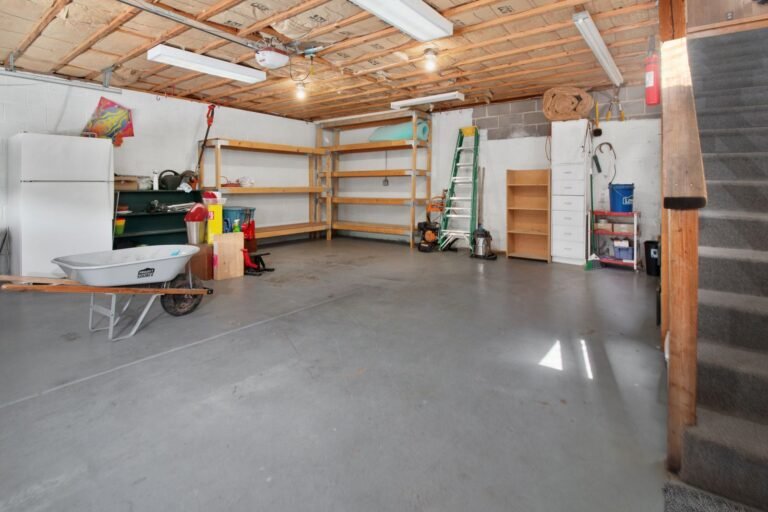
These are licensed stock photos (Pexels) chosen to show the kind of space or place described. They are not photographs of our contractor's completed projects.
HOA and ADU questions
Can my HOA stop me from building an ADU in Carlsbad?
Not if you own a house on a single-family-zoned lot in a planned development. Civil Code 4751 voids rules that ban ADUs or restrict them unreasonably. The HOA can still require approval and reasonable design standards. Condo and townhome owners have weaker protection until AB 956, as reported, takes effect in 2027.
Can the HOA block my garage conversion because garages are for cars?
For a house in a planned development, generally no: a garage-use clause alone is not a valid reason to stop a conversion, though the HOA can keep enforcing parking rules against owners who do not convert. In the Mystic Point condo case, the same kind of clause won because the court found 4751 did not apply to that community.
How long does my HOA have to approve an ADU?
No state statute sets a number of days. Civil Code 4765 requires the association's procedure to state a maximum response time, so look in your architectural guidelines. The 60-day deadline you may have read about applies to the City permit.
Can my HOA limit renting out the ADU?
It can ban rentals of 30 days or less. It cannot prohibit or unreasonably restrict long-term rental of an ADU, and it cannot count the ADU as a separate unit toward a rental cap. More homeowner questions are on the Carlsbad ADU FAQ.
Sources
- California Civil Code 4751 (text)
- California Civil Code 4765 (text)
- California Civil Code 4741 (text)
- AB 3182 (2020), bill text
- FindHOALaw, AB 670 and common interest developments
- Epsten, ADU Q&A after AB 670
- Epsten, AB 3182 rental restrictions
- Davis-Stirling, Accessory Dwelling Units in HOAs
- Davis-Stirling, new laws (AB 1154)
- Tinnelly Law, requests to install ADUs
- CalMatters, Carlsbad HOA ADU ruling (Apr 2026)
- inewsource, San Diego HOA ADU law (Apr 2026)
- KPBS, California HOA triumphs over ADU law (Apr 2026)
- Times of San Diego, Carlsbad HOA ruling (Apr 2026)
- California Planning & Development Report (Apr 2026)
- Davis-Stirling, Eng v. Opperman (2025)
- LegiList, AB 956 (2025-26) status
- FindHOALaw, AB 956 and ADUs
- City of Carlsbad, Aviara Master Plan MP-177
- City of Carlsbad, Arroyo La Costa Master Plan
- City of Carlsbad, Rancho Carrillo Master Plan MP 139
- City of Carlsbad, Robertson Ranch Master Plan MP 02-03
- Tinnelly Law, Bressi Ranch Community Association
- ActiveRain, HOAs in Carlsbad (real-estate source)
- Wikipedia, Terramar, Carlsbad
Last checked November 7, 2026. AB 956's final status comes from LegiList and FindHOALaw and should be confirmed on the Legislature's official site. This page is general information, not legal advice.
Next step
Get your free Carlsbad ADU Fit Check
Three short steps, about a minute. A licensed San Diego County general contractor reviews what you send, checks your lot against Carlsbad's ADU, coastal and fire-zone rules, and replies with a realistic range and the questions that would change it.
- Which ADU types your lot allows, and the size and height limits that apply
- Whether coastal review, a fire zone or your HOA changes the plan
- A line-by-line range, including fees and utility runs, before you pay for drawings
- No obligation and no pressure follow-up